Showing posts with label Benefits. Show all posts

Friday, May 1, 2026

Education

By Aarush Venkat, Teen Red Belt


Education is one of the most important foundations to academic and practical success in any society. Though many people may not choose the traditional or “standard” route of going to college and pursuing a degree, education comes in other forms such as through real-life situations and experiences. This contrast may also be known through the simple phrase “book smart versus street smart.” Summarized perfectly by American comedian and actor J.B. Smoove, “There’s book smart, there is street smart, there’s relation smart, there’s too many different kinds of smarts to know them all.” Through Taekwondo, all of these different forms of education are strongly emphasized in our Moo Sul Kwan campuses. From memorizing rules to learning different moves and adapting to surroundings, education truly is a genuine factor that creates any CTI student.

Every CTI student is encouraged to familiarize themselves with a plethora of rules, regulations, and information about all aspects of Taekwondo from the CTI manuals. However, this is not simply a matter of pure memorization. Through these guidelines, students are encouraged to understand the broader meanings of these rules, and apply them in their own lives. Through this more academic form of education, students learn to connect the words on the paper to their physical practice in Taekwondo and elsewhere. Through constant reinforcement this also strengthens the student’s ability to evaluate and apply these rules and regulations in their everyday lives, thereby improving their effectiveness in and beyond martial arts.  Furthermore, the memorization of the CTI manual ensures that students are accustomed to performing and executing movements and techniques confidently and without hesitation. By internalizing these rules, students don’t have to focus or worry about simple techniques that are of second nature, which will allow the student to focus on learning advanced, detailed, and complex techniques that require more experience and practice.

Other than excellence through academic learning, education learned through external teachers, instructors and other mentors are equally valuable in providing high levels of practical experience for the CTI student. A mentor or instructor can not only be a brilliant source of inspiration and learning, but they can also shape the worldview of the student’s perspective. This means that in addition to learning techniques and forms by the instructor, students can also take away themes like discipline, leadership, respect, and perseverance through following the example set by upper belts and instructors. This form of education can also be a form of personal development, where the student can use their instructors as role models to help them advance their technical skills and personality. Although this type of education is most successful with younger kids or lower belts, it is still a vital form of learning that is applicable to all belts and all ages, as long as the students are open to being positively influenced by the external factors around them. 

A final source of education and learning is self-learning, or learning through experience and adaptation. This form of education is vital to a student’s growth,  and plays an important role  in their success in the future. By learning independently through experiences, students don’t always have to rely on instructors and mentors for guidance, but rather find solutions to  challenges on their own. Challenges faced in one’s everyday lives creates resilience and makes the student ready to face similar situations with confidence. This type of education can come especially useful during sparring, self-defense, poomse, and even fields outside of taekwondo, such as academics, where students can explore the possible resolutions to problems themselves. In addition, through student’s repeated self-paced practice, they can learn useful skills, like how to adapt to unfamiliar situations, how to deal with pressure, and how to make quick decisions based on their own judgement as well. 

Ultimately, education goes far beyond earning degrees and certificates. It can be obtained in a plethora of different ways, most notably academics or through self-experience. With a combination of all of these methods, the CTI student can truly excel in many areas of knowledge, and they will be prepared to face any obstacles that might occur by using these different skillsets to their advantage. By embracing all forms of education, CTI students will gain the knowledge, wisdom, and character necessary to succeed in all aspects of life. 

Monday, September 1, 2025

Martial Arts Classes for Adults


Have you ever driven past a martial arts school and thought to yourself, “that would be cool to try, but it’s only for kids” and just keep driving by? Or wanted to try it as a kid and never had a chance? Martial arts is definitely not just a sport for kids, and it’s never too late to start. Furthermore, participation in martial arts classes for adults at the Colorado Taekwondo Institute has a host of benefits that will last a lifetime. 

As adults, we often deal with stressful jobs and it can be difficult to find the time or energy for exercise. Martial arts classes for adults is a wonderful way to release stress thanks to the physical and cognitive aspects of training. At Colorado Taekwondo Institute a real emphasis is placed on holistic training that involves the mind, body, and spirit, as well character development through our philosophy of Ho Shin, or Self Control Before Self Defense. This mindset is invaluable during a trying day at work, or behind the wheel when the temptation to give into frustration is real, and as an adult training in martial arts provides a healthy way to process these stressors by training the mind and giving the opportunity to look forward to the next class.

Another benefit of participating in martial arts at any age, but especially as an adult, is the physical conditioning. Each class has an intense mix of aerobic and anaerobic exercise that benefits both the cardiovascular and musculoskeletal systems. The benefits of training solely in martial arts are many, but it is also an excellent way to supplement participation in other sports. In each class we spend a significant amount of time doing calisthenics and basic exercises, which builds musculoskeletal strength through body weight exercises and holding stances. This builds core strength as well as upper and lower body strength, which is important for not only being a successful martial artist but maintaining overall health in general. In addition to the calisthenics at the beginning of class, a martial arts class keeps the intensity up through the entire class which builds cardiovascular strength and endurance. Through things like forms, self defense techniques, and sparring, this high intensity workout will make your heart and lungs stronger with each class. This is so important as we age to maintain a healthy lifestyle throughout your life, and martial arts is something that all ages can do.

Finally, more and more research is proving a link between exercise and a reduced risk of developing dementia later in life. Because of the body, mind, and spirit aspects of the training, martial arts is an excellent way for adults to maintain that active lifestyle that keeps not only the body healthy, but the mind as well. So the next time you drive past a martial arts school, instead of brushing it off as a kids sport or something that you’re too old for, stop in and give it a try. Martial arts for adults is an activity that you can do for your entire life, and it will benefit not only your body but your mind as well.


Monday, May 5, 2025

Why Martial Arts and CTI Are Great for Preschoolers

By India Ross, 1st dan black belt

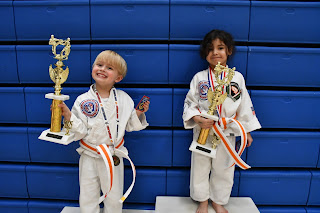
Two martial arts preschoolers winning awards at a Taekwondo tournament

When people think of martial arts, they often picture kicking and punching. But for preschoolers, martial arts offer so much more. Martial arts help young kids grow in every way: physically, emotionally, socially, and mentally. And with the Colorado Taekwondo Institute, they get to do it in a fun, safe, and positive environment.

While teaching martial arts to toddlers and preschoolers, I see how much it helped them. I watch shy kids come out of their shell, kids with excess energy learn to focus it in a calmer way, and all kinds of kids feel proud of themselves as they learned and progressed. It’s more than just exercise it’s a powerful way to help kids become their best selves.

Preschoolers are still learning how to control their bodies mentally and physically. At Colorado Taekwondo Institute, kids can learn to kick, punch, stretch, and moving in ways that build balance, coordination, and flexibility. These basic moves help kids become more aware of how their bodies move and grow stronger every day. Martial arts also builds strength and energy. Even simple movements help kids learn ways to get the energy out. The more they practice, the more endurance they gain, which means they can play, learn, and move with more ease and confidence. Martial arts also helps with brain development. When preschoolers learn new moves, forms, or patterns, they’re using their memory and building focus. These skills help them do better in school and other activities. Each class gives kids the chance to focus their attention on one thing at a time. Whether it's standing still, remembering a move, or copying a pattern, they’re training their brain as much as their body. Over time, this helps them pay attention better in other areas of life too.

Preschooler martial arts also helps preschoolers grow emotionally . Every time a child learns something like new moves or earns their next  belt, their confidence gets a boost. Reaching goals and progressing  makes them feel proud, and that feeling helps them believe in themselves not only in class but everywhere outside of class. Discipline is another important part of martial arts. In this case, discipline means being able to listen, follow directions, and stay focused. It also means showing up and trying your best even when something is hard. These lessons help kids in school, at home, and anywhere else they go.

Preschooler martial arts may seem like a individual sport, but they actually learn a lot about working with others. At Colorado Taekwondo Institute, kids are encouraged to cheer for each other at tournaments, learn to take turns, and practice learning with others. As well as learning good sportsmanship students learn all about respect. Preschoolers learn to respect their instructors, teachers, classmates, and themselves. They learn how to listen quietly, raise their hand and wait their turn, and treat others kindly. Martial arts can also help preschoolers learn how to cope with big feelings. Instead of getting angry or upset and throwing a tantrum, they learn to stay calm and use their words. They practice patience and learn that it's okay to feel frustrated, but that there are better ways to chanell that energy.

The Colorado Taekwondo Institute isn’t just about teaching kicks and punches, it’s about helping preschoolers grow to be the best possible version of themselves. The teachers understand how get down at their level to help kids learn and to make every class fun, supportive, and full of learning. Whether you want your child to build confidence, stay active, or learn how to focus, martial arts is a great place to start. And at Colorado Taekwondo Institute, your child will be supported every step of the way.


Monday, April 14, 2025

Benefits of Martial Arts for Teens

By Katie Minden, 2nd dan

A martial arts teenager breaking a board with a jump front kick

Martial arts for teens offers extensive benefits in areas including exercise, memory, and learning. Martial arts such as Taekwondo, Jujitsu, Karate, etc. are able to challenge and satisfy teenagers in a way that assists in the common struggles teens often experience. Organizations such as the Colorado Taekwondo Institute (CTI) are perfect to engage restless teens in a fulfilling and challenging activity to stimulate their bodies and minds. Martial arts can aid in stress, boredom, mental illness, and the general need for gratification that one can acquire by becoming involved in a sport. 

To begin, the most obvious benefit of martial arts for teenagers is the physical aspect. Many teens now are often pinned down with the burden of heavy school work or jobs, and even when enough free time rolls around, teens may take the time to rest or spend time on their phone. This rest is most definitely needed and deserved, but it can get to a point where instead of using down-time constructively to rest and restore, teens may fall into laziness and boredom. The assumption may be that adding on another task such as practicing martial arts into a weekly routine would add more burden to a teen’s already busy life, but martial arts can often be a time to relieve built up stress while also physically challenging oneself. A twice weekly class is enough to cultivate a teenager’s body into a strong, healthy vessel, which will translate into benefits at school and in life. At the CTI, our instructors are completely aware of the hectic lives teens live, but they also firsthand have either seen or have personally experienced the benefits of doing martial arts for teens. A workout routine is perfect to realign a teen’s mind through physical activity, and by combining the physical and mental aspects used in every martial arts practice, teens can clear clutter in their mind while challenging it simultaneously. 

Martial arts for teens is easily one of the most creative outlets that one can utilize. Often, with school and other activities, everyday life becomes completely objective, but at the CTI, we encourage each student to come to class with their ideas, questions, and learning developments they experience while practicing Taekwondo. While each martial arts program contains their specific aspects that the student must learn, oftentimes there is room for teens to explore why and how they can move their body in each form. This also adds to the physical aspect of understanding the connections of the body, from the hands to the feet and more, as well as the mental connection of practicing mind to muscle connection in every move performed. The CTI also strives to harbor reflexive thinking skills with martial arts aspects like free-sparring, a way to practice unchoreographed moves in a quick and high intensity manner while still remaining in a controlled and safe environment. In this way, martial arts for teens cultivates the free-thinking aspect as well as still requiring after and fore-thought about why the moves they practiced either did or did not prove successful. 

With the numerous distractions that happen every second of a teenagers life, oftentimes it is easy to become disconnected from the surrounding world and difficult to stay focused on any task necessary. Martial arts for teens serves as a stellar outlet to both improve focus for teens, while cultivating a grounded attitude in high-stress situations. The beginning steps of the program offered at the CTI always include establishing the expectation that to achieve the most out of every class, a student must focus their attention on their instructor. This concept often requires much more attention when applied to younger children, but teens are at a perfect developmental stage to understand that if they focus their attention on what they are being taught, they will understand the material quicker, allowing for a quicker progression. Along with providing a more enjoyable experience for a teenager, it also provides incentive to focus because the feeling of moving up and learning more becomes exciting. 

Martial arts may seem daunting especially considering the multifaceted nature of the physical and mental ways of learning required to understand martial arts. However, the Colorado Taekwondo Institute thrives to both challenge all students that walk in our doors and especially the teenagers which have some of the greatest potential to take what can be learned in martial arts and apply it to their everyday lives. The critical thinking and evaluation skills attached to the learning and memorization of different skills benefit teenagers in their school, work, and home lives. The physical outlet to relieve stress allows teenagers to constructively use their time not only to break away from the ever-constant homework, but to focus on something that targets and stimulates satisfactory parts of the brain which teens need so as not to become too bogged down. Martial arts for teens offers a range of benefits in a variety of ways which both provide the teenager with a more expansive outlook and allow for these new perspectives to permeate into the hectic lives of teenagers and offer some guidance. 

Monday, September 16, 2024

The Value of Integrity: A Pillar of Everyday Life

By Eric Evans, 3rd Dan

Integrity, often considered the cornerstone of moral character, is a timeless virtue that holds immense significance in our everyday lives. It is the alignment of our actions, thoughts, and words with our deeply held principles and values. While integrity may seem intangible, its impact is far-reaching and touches every aspect of our personal and professional lives. In this article, we explore why integrity is vital and how it influences our interactions, relationships, and overall well-being.

Integrity breeds trust, forming the bedrock of meaningful connections. When individuals consistently demonstrate honesty and reliability, others develop confidence in their character. By living with integrity, Moo Sul Kwan students convey authenticity and create an environment of openness, where people feel safe to express themselves. Whether it's in personal relationships, workplaces, or even casual encounters, trust is fundamental for effective communication and fostering healthy connections.

Integrity is closely tied to personal growth and resilience. When we commit to living in alignment with our values, we cultivate self-awareness and a sense of purpose. Upholding our principles requires courage and self-discipline, leading to personal development and the ability to make informed decisions. Colorado Taekwondo classes help students develop these principles and self-discipline. Moreover, the integrity developed in class enables us to weather challenges with resilience, as it provides a moral compass to guide us through difficult times, instilling a sense of conviction and strength.

In today's interconnected world, reputation holds significant importance. Integrity plays a crucial role in shaping how others perceive us and ultimately impacts our professional and social success. Consistently acting with integrity establishes a positive reputation built on reliability, credibility, and ethical conduct. This reputation, in turn, opens doors to opportunities, fosters cooperation, and attracts like-minded individuals who value integrity. Moreover, integrity cultivates loyalty, as people are more inclined to support those who consistently display honesty and transparency.

Living a life of integrity is essential for nurturing inner harmony and well-being. When our actions align with our values, we experience a sense of congruence and inner peace. Integrity helps us avoid the internal conflict that arises from compromise and deceit, fostering emotional well-being and mental clarity. By practicing integrity, we nurture a positive self-image, boosting our self-esteem and overall satisfaction with life.

Integrity serves as an essential compass in our journey through life. Its significance extends beyond individual actions, influencing our relationships, reputation, personal growth, and overall well-being. By cultivating integrity in our daily lives, we build trust, authenticity, and resilience while enhancing our chances of success and fostering inner harmony. As we strive for a more ethical and just world, let us recognize the enduring value of integrity and embrace its transformative power in shaping a brighter future for all.

Monday, January 15, 2024

Martial Arts Lessons at the CTI

By Meredith Botnick, 1st dan

Are you looking for quality martial arts lessons for yourself or your family? Perhaps you’ve been looking for a karate school and have been inundated with results. Often the various martial arts are referred to as 'karate', but there are differences as well as similarities between and even within the different styles. 

Karate is an art that originated in Japan before being carried to other parts of the world, whereas Taekwondo, the art that is taught at the Colorado Taekwondo Institute, originated in ancient Korea. Martial arts programs vary quite a bit and also have many things in common As a result, both Karate and Taekwondo have a basis in using the hands and feet for self defense and use a series of patterns to develop the skills necessary for proper execution of these techniques. The main differences, however, is the school behind the art. The quality of a martial arts school should be the number one factor when you're looking into joining a school for martial arts lessons. 

Colorado Taekwondo Institute specifically has a rich history of bringing quality martial arts and leadership instruction to the Denver metro area and beyond, having been established in 1983 by Grandmaster Sautel. CTI teaches the Moo Sul Kwan style of Taekwondo, which was developed hundreds of years ago in Korea and introduced to the United States by Grandmaster Lee H. Park in 1969. At CTI, the emphasis is placed not only learning the physical side of self defense, but also the mental and philosophical sides through leadership training and education. So if you’ve considered exploring martial arts lessons, including karate or taekwondo, and are looking for a high quality school, schedule a visit the closest CTI campus today!


Monday, January 8, 2024

The Best in Preschool Martial Arts Classes

Preschool martial arts classes
Martial arts classes are beneficial to people of all ages, but the long-term behavioral benefits are especially prevalent in preschool aged children who start taekwondo at a young age and adopt the concepts of self-control, focus, and confidence. Preschooler martial arts classes differs not in the way it is taught, or the types of techniques learned (as an example a 3-year old and a 30-year old adult will learn the same kicks),  but more in how the disciplines are picked up and what is emphasized to the student by their instructor. And one of the best martial arts schools for preschoolers, is the Colorado Taekwondo Institute

In preschool martial arts classes, learning the martial arts techniques as a form of defense is still the main goal, but the focus for the younger children is the body control and mental discipline which is still being developed. Whereas for adults, equal parts technique and and discipline are taught to the lower belts to ensure success as upper belts, the children’s education is centered around mainly the concept of self-control, as well as the body awareness required in class. Large, overarching techniques such as low stances, objective focus and tight hands remain the same, but the nuances in certain basics such as foot position in kicking or focusing before striking come later, once the children have hit the intermediate belts and begun to have the self-discipline required for more advanced techniques.    

Until that point, the emphasis remains on the mental fortitude to become a successful black belt- developing children’s self-confidence, their understanding of their own bodies and how to control themselves. This discipline in class then carries over into other aspects of their lives, encouraging good behavior at school and at home, and making these children of taekwondo almost like little ambassadors of our school’s tenets and beliefs. And creating the habit of having control over their bodies and minds allows for these kids to grow up and continue to grow and develop their skills as they progress through taekwondo. In this way they also become leaders among their peers, even the ones outside taekwondo.

Preschooler martial arts classes is so much more than just an exercise or a sport- it is a discipline, a life-long learning experience that will develop the child into a successful adult. Children, teenagers and adults can all benefit from martial arts in a myriad of ways; through the development of the body, mind and spirit, individuals can learn vital skills to prove as leaders. However, developing these traits early in children is the most beneficial in the long run, shaping them and their choices as they grow and learn about themselves, and blossom into ideal black belts and leaders of their generation.

Monday, December 11, 2023

The Benefits of Taekwondo for Teenagers

By Bridget Sautel, 5th dan black belt

A group of teenagers doing taekwondo at a tournament
Being a teenager comes with many different types of stress, ranging from educational and mental type stress, to social and home-life stresses. There are different outlets that can be used to cope with these stressors, some of which might not lead down good paths, and could result in bad outcomes. Luckily there are outlets that can lead to productive outcomes, that will guide the teen in a positive direction. One of these outlets can be to participate in the teen martial arts. The Colorado Taekwondo Institute is one of the longest established martial arts schools in the area. Some of the benefits Colorado Taekwondo Institute can give a teenager include: surrounding oneself with good influences, becoming and staying physically fit, establishing good habits, and learning how to commit to something and stick with it, even when it gets tough. 

It is crucial for teenagers to have healthy ways to release stress that comes with school, homework, and maintaining the social aspects of life. When participating in a taekwondo class, the student is so focused on what they are doing, it is equivalent to a form of meditation. When the student walks into the classroom, they leave everything at the door, and all the focus is put towards exercise, memorization, physical strength, and having fun. When all the focus is put towards these activities, the mind is pulled away from the stressors of everyday life, and the brain gets a much needed break. While the body is getting a workout, the mind is still actively learning at the same time. When you join a Colorado Taekwondo Institute class, and probably in other Littleton karate classes, you will be expected to attend class at least a couple times a week. Consistency is a valuable skill to acquire, especially as a teenager. Consistency will allow the individual to have something constant in their busy lives, which will be key to continued stress relief. 

One of the most important elements of teenage life is surrounding oneself with friends and acquaintances that are good influences, that will provide steady positivity and motivation. This will allow success in school, sports, social life, and home life, just to name a few. The life-long friends you will find at the Colorado Taekwondo Institute are especially unique, in that they will be the best influences in a multitude of ways. The main reason for this, is the bond that transpires with one another during taekwondo classes and events. This bond forms because of all the working out and sweating together, commitment to the same martial art, and most of all, the passion you share for the art of taekwondo. This positive influence will supply the individual with treasured qualities, including dedication, self-directed learning, and a bright and focused mind. These will all help a taekwondo student grow and stay engaged to a positive mindset. This will then flow out into other areas of life and allow success in school and at home. Prospering in these areas will open up so many opportunities in the near future and later on in life. At the Colorado Taekwondo Institute, and possibly in other Littleton karate classes, there will be a strong support circle that will help you progress through the belts and keep improving as a martial artist. These will be life-long friends that will provide support not only at teen martial arts classes, but also in daily life outside of taekwondo. 

Another characteristic that is imperative to develop during teenage years is how to maintain physical fitness and keep the body in good shape. As the years go on this can become more difficult, and it will become critical to establish healthy long-term habits. The continued attendance that is expected at the Colorado Taekwondo Institute and at some Littleton karate schools, will help to develop a healthy habit of consistency for the student. Physically conditioning the body, and learning exercises to stay in shape and develop flexibility, are also valuable habits to learn at a young age. Good health should never be taken for granted, and taekwondo will help keep the body young and fit. In addition to physical health, focusing on mental health is just as important. Excelling in school, and discovering new hobbies and friends, are key factors for favorable mental health. There is a huge educational piece that is incorporated into classes at the Colorado Taekwondo Institute, and students are expected to complete monthly homework’s and written tests along with the progression of belts. This educational component will carry over to schoolwork and will allow the student to stand out from the others, which will lead to a wider range of opportunities in the future. Developing and maintaining physical fitness early on will enable an individual to continue to do taekwondo at older ages and stay active for as long as possible.

The most invaluable quality a teenager can acquire is to be able to start something and then stick with it. This can mean different things depending on the area of life. In school this could mean sticking with a hard math problem until it is solved or finishing a difficult essay. For a teen martial arts student it could mean getting to class even when feeling unmotivated or lazy. When life or school may get tough, the instructor or teacher will help the student regain motivation to push through the hard times and continue to progress. If something gets hard or doesn’t come easy, it’s natural to lose focus, but being able to regain this focus after a short period of time is what matters. The big picture always needs to be in mind, and the student should always have short-term goals AND long-term goals to constantly be reaching for. This assortment of goals will ensure motivation to get through the small bumps in the road and keep pushing through. When things get hard or life gets busy, time management comes to the rescue and makes it possible to juggle all of these parts of life, in order to become successful. When a student becomes unmotivated, it can be beneficial to notice all of the qualities the Colorado Taekwondo Institute can provide – self-directed learning, self-discipline, stability, and lifelong physical fitness and learning. Remembering these valuable qualities can help regain motivation. This will lead to an all-around prosperous and positive continuous lifestyle.

Teenage years can be a difficult time, but with healthy outlets such as teen martial arts, along with good influences and habits, these years can become some of the most important and valuable for what’s to come. Success will be inevitable, instead of out of reach. There’s always going to be highs and lows, but how these are handled and overcome, is what will define an individual’s success. 


Monday, October 9, 2023

Modesty In Your Everyday Life

By Jordan Rutz, Teen Red Belt

A group of four teen martial arts students learning modesty through competition
Being modest is a huge part of being a Moo Sul Kwan Taekwondo student. We do lots of different events including tournaments, Summer Expos, Symposiums, and Camps. Especially at tournaments, we win some and we don't win some. When we get first place we have been taught, as a part of Moo Sul Kwan, to not brag about it. We should definitely be proud that we won first place, but we don't want others feeling bad because they didn't. Just know that now you have a huge target on your back now, theoretically. That means that everyone is going to try and beat you next time because you won. 

The definition of modest is basically the same thing as being humble. Being humble means not being too proud or not thinking of yourself as being better than someone else. You can still definitely be proud and you can boast about it all you want at home. But when you're at a tournament in front of all your competitors, after you've won, you want to shake hands and say good job so that they feel good about themselves. 

So how can being modest help you in your daily life? Well, let's talk about it. Let's just say your best subject in school is math. There are not many kids that are as good at math as you are. if you took a math test, and you got a hundred percent on that test, you don't want to brag about it. If I'm being completely honest with you, I wouldn't share my score with anyone even if I did very well. We, as Moo Sul Kwan students, want others to feel good about themselves. Just like the two big rules in class. Those rules are: pay attention and try your best. It doesn't matter whether you got a very low score or a very high score, as long as you paid attention and tried your best you're a winner.

Research findings have revealed that humble people are happy, and have more positive emotions lying deep inside of them. Being humble or modest also allows you to feel happy about the achievements of not only yourself but others. You will become less self-involved and take more of a happy interest in satisfying the needs of others, making you a better friend and a better person in general.

Overall being modest can help you wherever you are. They can help you because it will make you a better friend, it will make you a better person, and it will make you feel better inside. When we are modest We and the people around us are going to feel better making the world a better place. So tell me, how can you be more modest in your daily life?


Monday, April 3, 2023

MSK Taekwondo and Modesty

By Eric Evans, 3rd dan

Modesty is the quality of living with restraint in speech, actions, dress, and daily life. Spend 5 minutes on social media and you may wonder where our modesty has gone. It seems like every act is set to impress others, show off or perform something extreme. As martial arts students, we should use modesty in our daily lives to build each other up. Our model concept teaches us that our goal is to provide opportunities and leadership for others. Practicing modesty can be a powerful tool in helping us navigate our daily lives.

A martial arts black belt breaking a board with a jump back kick, while being modest about his skills
As a father and instructor, avoiding hubris and keeping my expectations in check, can help build up those I hope to lead. I have personally struggled with setting proper expectations for my boys. I see tremendous potential in both of them, but I must temper my expectations so that they can build up their potential over time. Taekwondo classes teach us this temperament. We are taught that there is an expectation to perform moves correctly, show outward and self respect, but it comes with the understanding that we will make mistakes. We are taught that if we are paying attention and trying our best, mistakes are ok; they are how we learn. 

Modesty allows us to be more aware of our own limitations, which can help us to focus our energies on the tasks that are truly important. At work, a team will excel and achieve more if each individual is modest in their actions. Relying on each other makes a stronger team and in the end a better product or service. Teams that lead by arrogance often do not last, do not grow and produce a product that boasts features that can not be obtained. Modesty can also help us to be more aware of the needs of others. By avoiding arrogance, we can be more mindful of the feelings and needs of those around us. We can more easily recognize when someone needs help or support, and can more readily offer our assistance.

Modesty can also help us to better manage our expectations and to be more accepting of failure. We can use this acceptance to help us to be more resilient in the face of adversity and to be more open to learning from our mistakes. This can help us to stay motivated and to stay focused on our goals. Not getting 1st place at a Colorado Taekwondo Institute tournament event can be upsetting. Practicing modesty however can help you focus on improving your poomse, sparring or endurance. It can be the driving factor for bringing you to the next level. When we are modest, we are more likely to be humble and to recognize our own limitations. We can use this humility to help us to better understand our own capabilities and to strive to do our best. This can help us to become more successful in our endeavors and to better manage our stress.

Finally, modesty can help us to be more confident in our own decisions and to better manage our emotions. We can use this confidence to be more assertive and to be more decisive in our actions. This can help us to be more successful in our endeavors and to better navigate the complexities of life. At the same time, it will build others around us up, bringing them along for the journey, rather than tearing them down. 

Tuesday, February 9, 2021

The Emperor's Seed - A Story About Integrity

By Jen Hancey, brown belt

There was once an Emperor from China who had no children and needed to choose a successor.  Thousands of children from across the kingdom came to the palace and were surprised when the Emperor exclaimed that he was going to choose one of them.  He gave them all a seed.  They were to go home to their villages, plant the seed in a pot and tend it for a year.  When they return in a year, the Emperor would judge their efforts and choose his successor.

A group of taekwondo martial arts in a class for adults and children
There was a boy named Ling who received his seed and returned to his village.  His mother helped him to choose a pot and put some soil into it.  Ling watered his pot every day.  Once a week, the children of the village would get together to compare their plants.  After a few weeks, there were signs of life in all but Ling’s pot. 

The weeks passed and Ling continued to water his pot every day.   After a few months, the pots really came to life.  Some had trees starting to grow, some had flowers and some had leafy shrubs.  Poor old Ling still had nothing growing in his pot, leading the other children to make fun of him.  Ling continued to water his pot every day.  A year passed and it was time to return to the palace to show what had grown and decide on the new heir.

Ling was anxious as his pot still showed no signs of life.  “What if they punish me?  They won’t know that I’ve watered it every day, they’ll think that I’m lazy.”  His mother looked him in the eye and explained that whatever the consequences were, he had to return and show the Emperor his barren pot.  Ling and the other children entered the palace gates.  By now, some of the plants were looking magnificent and the children were wondering which one the Emperor would choose.  Ling was embarrassed as other children looked at his lifeless pot and scoffed.   The Emperor came out and started to make his way through the crowd, looking at the many impressive trees, shrubs and flowers that were on display.  The boys all puffed their chests out and tried to look as regal as possible, hoping that they would be chosen as the heir to the empire.

Then the Emperor came to Ling.  He looked at the pot then he looked at Ling.   “What happened here?”  He asked.  “I watered the pot every day, but nothing ever grew.”  Ling muttered nervously.  Then he grumbled something to himself and moved on.

After a few hours, the Emperor finally finished his assessment.  He stood in front of the children and congratulated them on their efforts.  “Clearly, some of you desperately want to be Emperor and would do anything to make that happen, but there is one boy that I would like to point out as he has come to me with nothing.  Ling, come here please.”  “Oh no,” thought Ling.  He slowly sauntered to the front of the group, holding his barren pot.

The Emperor held up the pot for all to see and the other children laughed.  Then the Emperor continued, “A year ago, I gave you all a seed.  I told you to go away, plant the seed and return with your plant.  The seeds that I gave you all were boiled until they were no longer viable and wouldn’t grow, but I see before me thousands of plants and only one barren pot.  Integrity and courage are more important values for leadership than proud displays, so Ling here will be my heir.”  I enjoyed this story because, to me, integrity is something that is within YOU as well as something someone else might see or recognize.  At the end of the day, YOU know your own truth - if you have really been true to the character you portray to others, or if you have been deceptive. Sometimes it can be a difficult thing to prove to others if you have been honest, or have a high code of honor, but what really matters at the end of the day is what YOU KNOW ABOUT YOURSELF and TRY to emulate to others.  Like the homework states, ethics goes beyond being honest. However, it’s also matching not only your words to reality, but your ACTIONS.  What we do every day, on a consistent basis, is the proof of who we really are, at our core.  I think most people try to be good, but it means so much more to have integrity.  To strive to be TRUE to what is just, fair, upright and faithful not only with others, but with yourself.  To me, that is the definition of Integrity.

Integrity should be used in even aspect of everyday life - it’s great when it’s in the “big” moments, like the story in the homework with the racquetball tournament, but it should be used in the LITTLE moments too. Are you being kind and honest  to others, are you being kind and honest to YOURSELF?  Treating yourself with kindness and integrity is important too.  We all know it should be used at work, in the schools, and when we interact with our friends, family and co-workers and community members, but it’s important to not forget to honor and be trustworthy to yourself.  Are you feeding your body the way it should be fed?  Are you working out to the best of your ability?  Are you practicing taekwondo at home on a regular basis?  Others do perceive our actions and the content of our character, but only you know the truth and your true integrity.

Monday, November 9, 2020

Why Choose the CTI

 By Caleb Feagans, CTI Instructor

Students doing a side kick at martial arts classes at Colorado Taekwondo Institute
Like my own personal experience, parents and families often begin their search for martial arts schools for their kids or themselves by searching the web for ‘karate schools’. When my family and I first started to search for karate schools near us, none really stood out and impressed us; however, we did find the Colorado Taekwondo Institute (CTI), which has continued to impress us for 14 years and counting.  But why should you consider Taekwondo? And why should you consider the Colorado Taekwondo Institute over other Taekwondo schools? CTI not only teaches students the art of Taekwondo but the rich history of Korea. Not only will you be learning valuable self-defense techniques and sparring, but you see through demonstration how integrity, respect, courtesy for others, and self-control skills reinforce a well-rounded martial arts student and overall better person.

When my family and I started, we had no idea what Taekwondo was or what the difference was between Karate and Kung-Fu or why I should ever try it over the other two martial arts, but I soon learned why Taekwondo, especially at the Colorado Taekwondo Institute is so special. Although Karate and Kung Fu are similar to Taekwondo, the Korean martial art focuses more on kicking and leg techniques than the other two martial arts which emphasize the use of hand techniques.  After all, the definition of Taekwondo is the Korean art of smashing with the bare feet and hands. Taekwondo still utilizes several hand techniques but the hands are less emphasized in the Taekwondo basics and sparring. 

The classes offered at the Colorado Taekwondo Institute are taught by instructors with years of experience and training.  There are classes from ages 2 and up at a variety of locations around the state of Colorado and the CTI caters to all ages when teaching and there is something that all ages groups can learn by participating in CTI classes. Tiger classes (ages 2-4) focus on basic listening and motor skills and is a great release of energy. The junior classes (ages 5-11) are a great way for kids to start exercising regularly and help boost their confidence as they remain healthy! Teen (ages 12-15) and adults (ages 16 and up) begin a goal-oriented program that helps them learn the basics of self-defense and fitness. The CTI’s classes are structured the same regardless of what campus students attend classes and most other schools do not have a “backbone” basics routine quite like the Colorado Taekwondo Institute. 

The CTI was founded in 1983, and they continue to teach and accept new students every day for the past 37 years and there is no sign of stopping anytime soon.  So the next time you consider searching for any Karate schools near your location, consider stopping in at the CTI and see how Taekwondo can help you not only get in shape and learn self-defense, but be a better student at school, a better employee, and a better person.

Monday, October 5, 2020

Taekwondo for Toddlers!

Taekwondo for toddlers as a little girl gets ready to perform at a martial arts tournament

Martial arts is the perfect sport for kids, providing a valuable, positive outlet for their energetic selves.  When looking for taekwondo or karate classes for toddlers, it's important to find a quality program that will give the most to your children. That's why we highly recommend Taekwondo for toddlers at the Colorado Taekwondo Institute. 

Kids love working out with Taekwondo black belt instructors and fellow students in great martial arts classrooms with padded floors and master instructors.  All ages of kids can join us at the Colorado Taekwondo Institute!  No matter when a child starts Taekwondo, they can experience the benefits of Taekwondo. In fact, some black belts of today started when they were as young as three years old. It's great to think at one point there was a parent like you looking for karate classes for 3 year olds, and years later they are the proud parent of a Moo Sul Kwan black belt. No matter what age a kid is, they can enjoy Taekwondo at CTI, where classes are offered throughout the week for all ages.

Taekwondo is a great source of exercise for kids. Classes last 30 minutes for “tigers” (the youngest students) and an hour for older kids.  In both, kids get to exercise and have fun, both in a great Taekwondo environment.  Not only do kids have a chance to exercise in CTI Taekwondo classes, but they also improve their mind-body coordination and even learn about the science behind how the body works and how that affects Taekwondo moves.  There are workouts in Taekwondo classes at CTI for all parts of the body.

The benefits of CTI Taekwondo for kids are enormous. Besides being a good outlet for energy, Taekwondo classes also provide mental exercise.  As kids learn blocks, kicks, punches, and other techniques in Taekwondo classes, they improve memory, coordination, and patience, along with other mental skills.  Taekwondo is one of the best sports that include both physical exercise and mental excellence in its training.  While kids in Taekwondo classes are physically exercising, they are also learning discipline and attention skills.  The Taekwondo teachings at CTI is meant to include both the body and mind.

Whenever kids start karate classes for toddlers, they can enjoy the fun classes, physical exercise, and learning that comes with it.  All the black belt instructors at the Colorado Taekwondo Institute have had years of Taekwondo experience and are great with kids.  No matter the age, kids who join Taekwondo fall in love with the classes, learning, exercise, and experience.  They can even become black belt instructors themselves with time and practice.  All kids (and adults) who do Taekwondo enjoy it and learn every time they step into the classroom.

Friday, April 17, 2020

MSK Taekwondo for Austism Spectrum Disorder

By Deb Denny, 1st dan

Two adult martial arts students kicking with a roundhouse kickFor children and adults with autism spectrum disorder (ASD), there is a large variety in severity and types of symptoms. Most people on the spectrum face some challenges with communication, social interactions, balance, repetitive behaviors and communications. Treatment has been limited to limited several therapeutic methods such as speech-language therapy, occupational therapy, physical therapy, and behavioral intervention. These methods have proven to be intensive, expensive and time-consuming.  Numerous studies have shown traditional martial arts such as Kung Fu, Karate, Taekwondo, Mixed Martial Arts to reduce stereotypic behaviors, improve emotional and social function, and improve cognition and attention.  Starting martial arts such as Moo Sul Kwan Taekwondo may be a better way to protect the person’s dignity than a healthcare intervention, avoid labeling, reduce the person’s perception that s/he is “different”, allow for the improvement of symptoms in a less restrictive environment. Most of all the benefit of having your child participate in a sport that other children take for granted is a dream come true for parents.

When you choose Colorado Taekwondo Institute - Moo Sul Kwan Taekwondo, you are engaging in a practice that emphasizes overall character development, cognitive development and physical skill development. Patterned movements require a mind and body focus, and this combination is extremely valuable in creating a strong mind-body connection for physical and mental training.An additional benefit of adding Moo Sul Kwan Taekwondo into your ASD regimen is that it is fun and rewarding. Many occupational therapy and physical therapy routines are boring and difficult to stick to, as well as expensive.

When practicing Moo Sul Kwan Taekwondo, children and adults get to focus on themselves. While participating in class the focus is on their own movements, their own progress, and their physical and cognitive achievements. As students take visual and verbal cues to reproduce the movements as shown by their instructors, they are required to pay attention and try their best, which is all within their control to accomplish. With each action that repeats the movements from the last, they can progress at their own pace and enjoy accomplishments along the way.

If you’re looking for a new activity to improve upon symptoms for yourself or someone else with autism spectrum disorder, we hope you’ll give Moo Sul Kwan Taekwondo a try.

Saturday, October 5, 2019

Seniors and Exercise

By Thomas Hurst, orange belt

A senior doing martial arts at a Taekwondo tournamentExercise is good for all ages, as is evident with the success of the Colorado Taekwondo Institute. I believe that there is a misconception among the general populace that you have to be “in shape” to even start a martial art, martial arts are too hard to learn, seniors learning martial arts at various health clubs and recreation centers and there is a fair amount of interest expressed for that particular program. However even with the backing of the government there are many that do not take advantage of the program. Again why?
only young people can do it, and they would be embarrassed to exercise in front of other people. These are all misconceptions of not only martial arts but of exercise programs in general. Medicare has been promoting a no cost program for

I believe that most who do not participate do not see the advantages to regular exercise programs, do not participate long enough to develop friendships and a feeling of camaraderie and teamwork. That is a benefit of CTI that doesn’t happen when you are working out on your own or with a video.The support of staff, higher belts, fellow students, and family is a great motivator.  To understand that is not just about physical exercise but mental exercise that conditions your whole self.  It is also about character building and modification, for others to see and follow.

I had the very same misgivings when my family urged me to start again in Moo Sul Kwan Taekwondo at the CTI. I knew I needed to exercise to maintain my physical abilities to perform my job or the hobbies and recreational activities of which I am fond. For me it is the physical activity, stretching, and mental focus that now appeal to me. It is the feeling of accomplishment that comes with each stripe and with each belt. It is the difference in performance that I can perceive and demonstrate outside of class by performing demanding physical tasks. It is knowing that I am attempting to maintain that sharp mental focus necessary to keep up with the demands of modern society.  It means I can keep working if I need to or want to, and I can play with the grandchildren and help them experience life in the mountains. It is the feeling of family, teamwork, and friends at CTI that helps keep me motivated.

We cannot remain young no matter how hard we try. We can however make those years we have left more enjoyable and I believe we can make them last a bit longer by promoting a healthier lifestyle, especailly by martial arts for seniors.  In my case I know that muscles will hurt and joints will ache regardless so I might as well be strong.  There are many that will be put off by the realization that there will be some discomfort and will not subscribe to the “no pain, no gain” philosophy. There are no promises that it will be easy but we are going to become”experienced by time”. Let’s make the most of it!

Monday, February 4, 2019

Anger: How to Channel that Feeling

By Vivi Brown, red belt, CTI BBC Member

Anger is an onset of emotion of when we are feeling threatened, disrespected or frustrated. There are several different types of anger that is used to express our emotion such as Assertive Anger, Behavioral Anger, and Chronic Anger[1]. Our current situation can manifest which type of anger or emotion may surface and lets face it we have all had experiences with it, but learning how to channel that feeling will have its benefits.
A black belt using a martial arts workout to develop anger management
Assertive anger, perhaps the positive out of these examples, is when you are feeling frustrated and you use this emotion as a catalyst motivator to overcome your fear and achieve your goals.  One simple example in everyday life is- have you looked at your house and have been frustrated at the fact that there is so much clutter around and then you just decide that “THIS IS IT” and you somehow end up cleaning faster than normal.  Instead of yelling or throwing items around the house to relieve that frustration it turned into a positive outcome of a clean house.

Behavioral anger, this type of emotion is expressed physically, throwing of items across the room, even perhaps physically attacking someone.  This is not a good way to handle anger as its destructive manner.  When feeling this type of anger its best to give yourself some time, remove yourself from the situation like Zuki the turtle, go take a walk and breath and give yourself a moment.  This will help you calm down till you can think clearly.

Lastly chronic anger, this is an ongoing emotion of frustration and anger towards oneself, and this can have an adverse effect on your health.  Handling this kind of anger may be difficult for some, its about forgiveness and moving on.

Here at Colorado Taekwondo Institute we have the opportunity to channel all those types of anger, we get to relieve our frustrations of our day by working out, and in turn building up ourbodies physique, endurance and our spirit.  We can yell it out with our kihaps that tighten our stomachs, we get to hit targets to improve our accuracy, and we even get to build our spirit by knowing that letting things go are better in the long run.  We use all our aspects of building ourselves up to have the knowledge on how to handle the situations and be in control of our emotions.

----------------------------------------------
[1] https://lifesupportscounselling.com.au/10-types-anger-whats-anger-style/

Wednesday, January 30, 2019

How Moo Sul Kwan Taekwondo Actually Influences our Brain

By Irene Kim, red belt

Given the anatomical background of our brains, I would like to describe how I believe we are changing our brains for the better when we practice Moo Sul Kwan Taekwondo.  It has to do with more recent research into the concept of neuroplasticity, the ability of the brain to form and reorganize synaptic connections in response to learning or experience.  In the earlier half of the 20th century, it was thought that the adult brain was relatively fixed, that not much happened after a certain age.  Since then,research has uncovered how numerous parts of the brain can in fact change, even into adulthood.

Let’s first define the concept of learning. The general definition is “…to acquire skills and alter behavior as a result of experience.” Delving deeper, “Skill learning is defined here as a change, typically an improvement, in perceptual, cognitive, or motor performance that comes about as a result of training and that persists for several weeks or months, thus distinguishing it from effects related to adaptation or other short-lived effects.”[1] This definition is relevant to the extended course of progress in MSK TKD: We know it takes dedication, effort and time.

There are many components of learning that have been studied and are applicable to our training.  These include the difficulty of the task being learned, motivation of the learner, the frequency and type of feedback provided, individual variables, and generalization to other areas.  It is clear that our MSK TKD task is involved and challenging, yielding benefit and extension into all areas of our lives.  It is a multi-level, complex, detailed physical study.  We are always learning something new.

Thus, I believe there are a myriad of neuronal benefits, including increasing the size, capacity, and function of our brains.  I also believe new neurons may be created, as well as improving the strength of communication between existing ones.

Increasing the size of our brains

Perhaps the most striking idea is that Moo Sul Kwan Taekwondo may actually be growing our brains, no matter what age we are.  It is the increased cellular connections, or neurons talking more,that can make the brain grow in size as we learn. This has been demonstrated in people who learned to juggle by something called diffusion tensor imaging (DTI), which measures white matter microstructure.  subjects literally increased the size of their parietal lobes.[2]  The reason I mention juggling is because it is a complex visual-motor skill and involves intense coordination, similar to TKD.   Interestingly, these studies demonstrated that the improvement happened regardless of how good the subjects were at juggling, that it was the learning process that was important for brain development.  Anatomical changes in grey matter from the processing and storage of complex visual motionwere also documented.[3]


Increasing the capacity and function of our brains as relates to Grandmaster Park’s Model Concept

As discussed previously, to learn at all levels of our training, we must have specific and focused attention.  This directed mental effort (cognitive domain) leads to “…the brain’s potential to correct its own flaws and enhance its own capacities”[4] We can newly wire and re-wire our brains.  New synapses are formed and synaptic strength at certain junctions is increased, both of which are believed to underlie learning.

Level One (White to Orange Belt)

When we are in class for the first time, our visual systems (occipital lobe) are working hard to process moves we have never seen.  At the same time, our auditory centers (temporal lobe) are hearing and making sense of the new instructions and Korean words.  Our parietal and frontal lobes are processing these instructions to perform the new movements.  New pathways are connecting as we learn the respect of body contact and our fellow students.

Level Two (Green to Blue Belt)

As we advance in our training, the basic information has been processed into our long-term memory.  We now know and recall moves and demonstrate motor learning (‘muscle memory’), a form of procedural memory that involves consolidating a specific motor task into memory through repetition.  We are doing this increasingly as we perform more and more poomse, self-defense, one-step and sparring moves.   As movements are repeated over time, more long-term muscle memories are created,allowing more movements of poomse to be performed without conscious effort.  The various areas of learning begin to depend more and more on one another. We cannot learn more complicated moves if we cannot visually or auditorily process [5]and recall the previous ones.

Level Three (Purple to Red Belt)

As we engage in deeper self-directed learning, we are promoting self-directed neuroplasticity.  The specific details and strategies of movements in sparring, poomse, and breaking may be ones we had not previously focused on in the earlier levels.  We attend more specifically to our practice, thus increasing the size of our brain’s representation of specific body surfaces and muscles when we follow through with instruction; Our brains are further enhancing. As we think about the moves more and gain more in-depth understanding of them, I envision the connections within the frontal lobe becoming stronger and more numerous.

Level Four (1st dan and up)

The model concept allows our instructors to focus on what may be important for a student at any level of training.  The frontal lobes are at work with planning, making decisions and integrating details.  Perhaps with each new student, new neurons are born (neurogenesis) with corresponding new pathways.  The intense learning and consolidation into long-term memory that has happened at this level occurred through intense brain activity and enhancement.   A fascinating endeavor would be to obtain brain imaging of an individual on day one of TKD and a follow-up scan as a Black Belt.   I believe we would see a bigger brain with many more of those colorful, increasingly active pathways.

CONCLUSION

In conclusion, I hope I have provided some interesting insights into the neurophysiology of our Moo Sul Kwan Taekwondo practice with CTI.  Intense neuronal activity is continually happening in our brains as we delve deeper into the Psychomotor, Affective and Cognitive Domains. This activity happens not only during actual classes and events, but also when we practice and think deeper about the moves at home or elsewhere.   As our practice extends to all areas of our lives, we are utilizing these neuronal processes more and more throughout our days.

Perhaps you have consciously or subconsciously felt these changes by having better attention and energy, better time management and organization, and better overall mental clarity.  The motor pathways have strengthened along with our bodies.  All of this is a result of how our brains have grown.  Every detail of improvement has been facilitated by the networks we have created and strengthened in our brains as we grow to higher levels of mastery in the fascinating Martial Art of Moo Sul Kwan Taekwondo.


------------------------------------------------------
[1] Green, C.S. and Bavelier, D. (2008). Exercising Your Brain: A Review of Human Brain Plasticity and Training-Induced Learning. Psychol Aging. Dec; 23(4): 692–701.

[2] Scholz, J.; Klein, MNat Neurosci. 2009 Nov; 12(11): 1370–1371. Training induces changes in white matter architecture. Jan Scholz,1,*Miriam C. Klein,1Timothy E.J. Behrens,1,2 and Heidi Johansen-Berg1   https://www.ncbi.nlm.nih.gov/pmc/articles/PMC2770457/

[3] Neuroplasticity: changes in grey matter induced by training.Draganski B, Gaser C, Busch V, Schuierer G, Bogdahn U, May A. Nature. 2004 Jan 22; 427(6972):311-2.

[4] Schwartz, J.M. and Begley, S. (2002). The Mind and The Brain. Neuroplasticity and the Power of Mental Force.

[5] Simultaneous Processing of Information on Multiple Errors in Visuomotor Learning Shoko Kasuga, Masaya Hirashima, Daichi Nozaki. August
29, 2013  https://doi.org/10.1371/journal.pone.0072741

Monday, October 29, 2018

Exercising on a Regular Basis

By Lydia Willis, red belt, age 12

Do you exercise on a regular basis? If not you should. There are many different benefits of exercising daily. For example it can make you happier, exercise can help increase your energy levels, and it can also help with relaxation and sleep quality.

Three Taekwondo black belts performing side kicksExercise can make you feel a lot happier on a day to day life. It helps with depression and anxiety. When you exercise it produces many changes in the part of your brain that regulates your stress and anxiety. By exercising you increase your brain’s sensitivity and produces serotonin and norepinephrine hormones which relieve feelings of depression. Endorphins produce many happy and positive feelings. They are also produced when you exercise and they help to reduce the perception of pain. Exercising not only helps with feelings of depression, but also with feelings of anxiety.
It can help you be aware of your mental state and practice distraction from your fears. One of the most interesting parts of this is that it doesn’t matter how intense your workout is to get the benefits of extra happiness. One study had several people who were diagnosed with depression worked out daily and it showed their happiness levels increased and their depression spells decreased.

Another benefit of exercise is that it is able to increase your energy levels. Exercising can be a serious energy boost for those who do exercise daily and are healthier and for people suffering from various medical conditions. One study even found that after only six weeks of regular exercising feelings of fatigue in thirty-six healthy people who had reported persistent fatigue reduced significantly. To go even further exercise can seriously increase the energy levels of people suffering with chronic fatigue syndrome (CFS) and other serious fatigue illnesses. Exercise is one of the best ways to counter attack CFS and his more effective than most other treatments. Even passive treatments like stretching are better than many other kinds of treatments. Finally, exercise is also really good for people with diagnosed with progressive illnesses including cancer and multiple sclerosis. The more you workout the easier it becomes to go about your daily life

The final benefit of exercise that I have is that exercising can help with relaxation and sleep. There is an energy depletion you get when exercising that stimulates a recuperative process when you’re asleep. If you workout at night the high temperature rise you experience while working out helps to cool your temperature while you sleep. One study was able to find that one hundred and fifty minutes of vigorous exercise made an improvement of sixty-five percent in sleep quality for those who participated. A different study that lasted a little bit longer explained that after sixteen weeks of physical activity increased sleep quality by a serious amount and even helped seventeen different people suffering with insomnia to sleep much better than the control group.

Exercise is important to your well being and everyone should exercise more. It helps with anxiety and depression, being wide awake during the day, and staying fast asleep at night.

Monday, May 21, 2018

Changing the World with Respect

By Amy Krupp, blue belt, CTI BBC Member

While reading the daily news, it’s hard not to get a little bit down about the state of the world. It seems lately that the only news is bad news. I can’t help but think that the world would be a much better place if everyone did their best to treat every person they interact with on a daily basis with respect. Respect is such a simple thing really, but something that can have a huge positive impact on the world.

Martial arts black belt and student showing respect with a bowThe dictionary defines respect as “a feeling of deep admiration for someone or something elicited by their abilities, qualities, or achievements.” I like to think of respect as something a little bit broader than that though. I recently read a story about a father explaining the concept of respect to his children, and I like the definition he gave them. He said that respect is treating something that matters like it matters, and disrespect is treating something that matters like it doesn’t matter. It’s a simple definition, but it really resonated with me. I try to live my life in that way. My family and friends mean a great deal to me, so I do my best to show them how much they mean to me by showing them respect. I do this by showing my love and support, and doing whatever I can to make sure they know that they are valued and important. This can permeate in every aspect of life. You can show respect for your belongings by treating them like they matter- whether that means changing the oil in your car, or sweeping the floor in the kitchen. You can show respect for your studies by listening to your teacher, studying for your exams, and doing your homework. You can show respect for yourself by eating right, getting your exercise, and getting enough sleep. Respect can be shown in every aspect of life.

When you move forward with this mindset of showing respect to everything and everyone, things will start to change. I know that one area of my life that I struggle to show respect is with people who have vastly different political and social beliefs than my own. It can be hard to respect someone who is saying something that completely conflicts with your own moral beliefs. But it’s important to remember that everyone is human. Just because they don’t agree with you on every topic doesn’t mean they don’t deserve respect. You may find that you agree with them on other topics. You may find that they have reasons for believing what they believe. I have found that I can get along with most everyone if I look for common ground, and remember that everyone deserves respect.

The next time you read the news, imagine how almost every negative story could be erased if everyone involved showed respect toward each other. When it comes down to it, we’re all just people trying to live our lives the best way we know how. Everyone is someone’s child, parent, friend, or coworker. Everyone matters. When it comes down to it, it doesn’t matter who that person voted for, or where they were born, or whether they think pineapple belongs on pizza. All that matters is that they are doing the best they can. You can do your part in making the world a better place, and in making the news a little happier, by looking for the good in people, and by moving forward with the intention of treating everyone and everything with respect.

Friday, March 30, 2018

Moo Sul Kwan Martial Arts: Experience of the New Old Guy

By Brian O'Reilly, green belt

I am new to Moo Sul Kwan Martial Arts. I’m 50 years old; but I’m not old! Thanks in large part to Moo Sul Kwan Martial Arts!

Martial arts for adults in fun and exciting adult martial arts classesI have been an athlete for nearly all of my life and involved in a wide range of organized sports, exercise and recreational activities. Participating in sports as a youth is very different than participating as an adult.  When you are young, there is so much to learn about your body, your competitive spirit, how to train, and how to interact with opponents, teammates, referees and coaches. I grew up around athletics as my dad was a high school coach for 40 years.  I asked my dad at an early age why sports are important for a student athlete who will never be good enough to “go pro” and make a career as a professional athlete.  His answer pointed out the obvious physical and mental benefits of exercise for people of all ages.  He also stressed the equally important personal and social lessons of learning a skill, consistent hard work, commitment, loyalty,positive interaction with teammates/authority figures, sportsmanship and how to navigate through successes and failures.  He pointed out that all of these lessons are available through athletics, especially in a solid program lead by a great coach.  He stressed that these are life-lessons and should transfer into adulthood to create the leaders of tomorrow.  Adults who never learn these life-lessons struggle personally, professionally and can have a negative impact on society as a whole. Fortunately I have been surrounded by great teachers, coaches, bosses and mentors.  As an adult the life-lessons of athletics continue to ring true and help me grow, physically, mentally and spiritually as a well-rounded person.  Moo Sul Kwan Martial Arts is now my sport of choice as a 50 year old man.

Moderation was never really my thing.  My body has paid the price over the years for extreme living. Broken bones are par for the course in any contact sport; but years of heavy weight-lifting and CrossFit programs resulted in various surgeries which eventually slowed me down as an adult.  I was unhappy during the recovery/healing times, craved physical activity, and competition. Yet, I was also worried that I would be back under the knife again if I kept up the same extreme and active pace. I had always been fascinated with the Martial Arts from afar, so I thought I would give it a try.  There were so many options available it was difficult to choose; but after some in-depth research I joined The Colorado Taekwondo Institute and the study of Moo Sul Kwan Martial Arts.   I was very fortunate to have landed where I did!

Moo Sul Kwan Martial Arts at the Colorado Taekwondo Institute (CTI) was exactly what I needed.  The Colorado Taekwondo Institute was founded by Grandmaster James M. Sautel, 8th Dan Black Belt, in 1983, and there are now several locations throughout the Colorado.  CTI works in association with the Moo Sul Kwan Martial Arts Institute and the American Martial Arts Sports and Education Association.  Moo Sul Kwan Martial Arts was brought to the United States by Great Grandmaster Lee H. Park in 1969 and serves as the model for training at all Colorado Taekwondo Institute locations.  The CTI mission statement is “To encourage and develop world-class leaders through educational excellence and Moo Sul Kwan Martial Arts traditions”.  For the past year and a half, my personal experience with CTI and Moo Sul Kwan Martial Arts training has been in line with the CTI Mission Statement and the life-lessons I have been taught growing up.  The aims of Moo Sul Kwan Martial Arts, the tenets of Taekwondo and the philosophy, goals and operation of the Colorado Taekwondo Institute complement my lifestyle, goals, ethics, exercise and competitive needs. I enjoy the ability to challenge my body in new ways, and for many years to come, which will lead to healthier longevity without the high-risk of injury.  I also enjoy the mental and emotional challenges related to learning a new discipline and starting out a program as a rookie.  I’m the new old guy!  Starting Moo Sul Kwan adult martial arts is new experience that teaches humility, patience and perseverance.  I believe that a little suffering in any forum is the requirement for success.  As a 50 year old, that suffering can be more apparent than when you’re an 18 years old athlete!  But that challenge to stay involved, active and fight through the aches and pains has its rewards.  The rewarding and positive experience of Moo Sul Kwan martial arts for adults at the Colorado Taekwondo Institute is more than physical.  The bonding and team support with fellow students, support by upper-belt students and black belt instructors is a mental and emotional reward by itself.  Most prominent though is the inspirational guidance, instruction and care provided by Grandmaster Sautel.  I am fortunate to have found Moo Sul Kwan adult martial arts, which provides comprehensive body, mind and spirit training, knowledge and self-defense skills. I am fortunate to have found The Colorado Taekwondo Institute, which honors the traditions of Moo Sul Kwan Martial Arts while providing a positive and exciting modern-day forum for training, learning and competition.  I am very fortunate to be surrounded by supportive CTI Students and Instructors…and I cannot say enough about how lucky I am to study under CTI founder Grandmaster Sautel.  I’ve added him to my very short, selective and influential list of heroes. In talking to fellow students I know that I’m not alone as he inspires so many others at CTI.  I am always happy to have the opportunity to share my positive experience with others, especially those with similar backgrounds and needs.  CTI and Moo Sul Kwan martial arts for adults have provided everything I was looking for and I’m excited to continue my training for many years to come.